Overview
Lesson 1: A Treaty is Supreme
Lesson 2: Shopping at Celilo
Lesson 3: Traditional Homelands, Traditional Foods
Lesson 4: How Salmon Teach Us History
Lesson 5: Defining What’s Important in Your Life
Standards
HISTORY
- SS.CM.HS.01—Reconstruct, interpret, and represent the chronology of significant events, developments, and narratives from history.
- SS.CM.HS.02—Compare and contrast institutions and ideas in history, noting cause and effect relationships.
- SS.CM.HS.03—Recognize and interpret continuity and/or change with respect to particular historical developments in the 20th century.
- SS.CM.HS.04—Understand how contemporary perspectives affect historical interpretation.
- SS.CM.HS.06—Understand how individuals, issues, and events changed or significantly influenced the course of U.S. history after 1900.
- SS.CM.HS.07—Understand the causes, characteristics, and impact of political, economic, and social developments in Oregon state history.
- SS.CM.HS.08—Understand the causes, characteristics and impact, and lasting influence of political, economic, and social developments in local history.
CD Segments to Play
For this topic, go to Historical Introduction, Tribal Rhythms, and Turtle Island Storytellers.
Background
Suggested Strategies
- Ask students to research the history of federal judicial decisions that affect salmon in the Columbia Basin. Discuss the implications of these laws for the local area. Ask a representative of a federal agency like the Bonneville Power Administration, U.S. Fish and Wildlife Service, Bureau of Land Management, and state and tribal fisheries personnel to explain how present programs are working. Review proposals to remove dams and debate the pros and cons. Create a mock court and conduct a trial of a tribal member charged with fishing out of season on ceded lands. If accessible in your area, invite a member of CRITFC board or staff to visit your school and consult with the prosecution and defense teams.
Activities
1. Handout
Use student handout (direct from CRITFC website).
2. Discuss
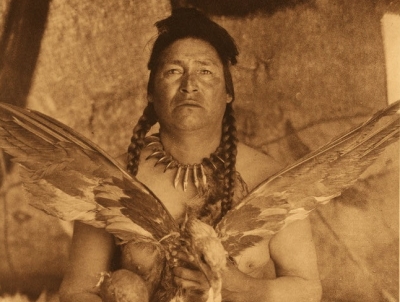
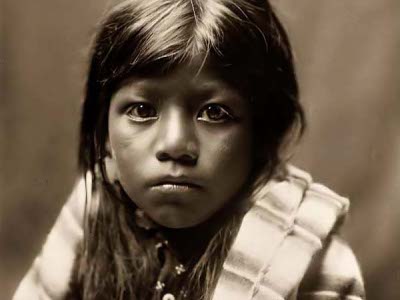
Read and discuss the following statements about the importance of salmon to the tribes (adapted from CRITFC teacher guide for Chinook Trilogy, thoughts from an elder appearing on the video).
- Salmon are part of our spiritual and cultural identity,
- Over a dozen longhouses and churches on the reservations and in ceded areas rely on salmon for their religious services.
- The annual salmon return and its celebration by our peoples assures the renewal and continuation of human and all other life.
- Historically, we were wealthy peoples because of a flourishing trade economy based on salmon.
- For many tribal members, fishing is still the preferred livelihood.
- Salmon and the rivers they use are part of our sense of place. The Creator put us here where the salmon return. We are obliged to remain and to protect this place.
- Salmon are indicator species. As water becomes degraded and fish populations decline, so too will the elk, deer, roots, berries and medicines that sustain us.
- As primary food source for thousands of years, salmon continue to be an essential aspect of our nutritional health.
3. Reflect
In your own culture, are there traditions and stories that define you and your family? Can you trace these traditions in the context of American and World History? In your own religious or cultural tradition, were there predictions of what would come someday (as in Old Testament Bible prophecies). Is it possible that elders in your family seem to have unusual abilities to interpret the flow of history and foresee what will come? Are there certain kinds of arts, crafts or skills that typically involve sharing cultural values and historical information to younger generations (e.g. in many Mexican families, stories are shared when extended family members participate in tamale making).