Overview
This unit provides a brief history of the Confederated Tribes of Grand Ronde. There is one lesson for each area of focus in social studies: civics (tribal governance and legal framework); geography (locations and distances of specific sites mentioned in the radio program); economics (comparisons of trade then and now); history (comparing the forced removal of the tribes now comprising the Grand Ronde to other similar events in American and world history and honoring the role of elders in transmitting the culture); and social analysis (looking at burial practices then and now).
Lesson 1: What Do Treaties Mean in Today’s World?
Lesson 2: The Fur Trade as a Model for Economic Systems Today
Lesson 3: Sacred Sites
Lesson 4: Key Figures and Events
Lesson 5: Paying Respect
Extending the lesson/References
GUIDING QUESTIONS
What has happened to tribes originally merged into the Confederated Tribes of Grand Ronde in terms of their people, language, traditions, lifeways?
What opportunities for younger members are available?
What careers are suggested by the topics covered in this program?
PREPARING TO TEACH THIS LESSON
Listen to the entire program on the Grand Ronde, then find the exact segment(s) to play for students that match the lessons above.
Try to have a high-quality CD player in the classroom so all can hear the segments selected for each activity. Many of the music segments are also ideal for setting the mood for a lesson and as background for the opening of class.
| BASED UPON WISDOM OF THE ELDERS RADIO: SERIES 3, PROGRAM 7
Lesson plan written by Larry McClure Historical Introduction: Read the transcript… Arlie Neskahi discusses the history of this Columbia River tribe and how tribes from the region and beyond all converged on the villages of the Wishram and the Wasco to trade, socialize and do ceremony. Elder Wisdom: Read the transcript… Brian Bull shares the story of Adeline Miller who was “born up in the mountains during huckleberry time.” Now a tribal elder, she reminds her children and grandchildren of their origins through song, dance, and laughter. Speaking Native: Read the transcript… Don Addison tell us that three native languages survive on this reservation today: Northern Paiute (also called Numu), Sahaptin (or Eecheeshkeen), and Wasco, known as Kiksht. Sacred Landscape: Read the transcript… Judy Bluehorse Skelton talks about berries, including huckleberries, blackberries and raspberries, which burst with nutrition, and what the tribe is doing to ensure there will be plenty to pick in the future. Tribal Rhythms: Read the transcript… Nico Wind introduces us to the music of the Warm Springs tribe presented by traditional singer, Carlos Calica, who is the keeper of the Art Mitchell drum. This drum belonged to his grandfather and is a drum Carlos sang on as a child. Health and Healing: Read the transcript… Rose High Bear introduces us to Faye Waheneka who warns us to stay away from unhealthy food, including fry bread. Raised by her grandparents, she believes in using healthy traditional foods, such as edible roots, berries, deer meat, grouse, and salmon to manage her diabetes. Artists Circle: Read the transcript… Bruce Crespin highlights the rediscovery of Wasco basketweaving by tribal artist, Pat Courtney Gold who is internationally recognized for the art of full-turn twining. She shares her travels across the country to visit museums with Wasco baskets in their collections and how she reconnected with a basket purchased by Lewis and Clark in 1805. Turtle Island Storytellers: Read the transcript… Darlene Foster shares first contact stories she learned from her mother, who learned them from her grandmother. “They always told stories about how my ancestors knew before the pioneers came that they would come in. They would flow in like a river.” |
||
| INTRODUCTION | ||
| “The Confederated Tribes of Grand Ronde Community of Oregon includes over 20 tribes from western Oregon and northern California that were relocated in the 1850s. These included the Rogue River, Umpqua, Chasta, Kalapuya, Mollala, Salmon River, Tillamook, and Nestucca Indians who had lived in their traditional homelands for over 8,000 years before the arrival of the first white visitors. They lived off the land—fish and game were plentiful, and what they couldn’t catch in the rivers or hunt in the forests, they acquired by trade with other tribes, and later, with the non-Indians.
“Grand Ronde reservation was established by treaty arrangements in 1854 and 1855 and an Executive Order of June 30, 1857. The Reservation contained over 60,000 acres and was located on the eastern side of the coastal range on the headwaters of the South Yamhill River, about 60 miles southwest of Portland and about 25 miles from the ocean. “In 1887, the General Allotment Act became law. Under the law, 270 allotments totaling slightly over 33,000 acres of the Grand Ronde Reservation were made to individual Indians. With these allotments came a provision which allowed the Indian lands to go from federal trust status to private ownership after 25 years. The purpose of the Act was to make farmers of the Indians. However, the result of this action was the loss of major portions of the reservation to non-Indian ownership. Then, in 1901, U.S. Inspector James McLaughlin declared a 25,791 [acre] tract of the reservation ‘surplus’ and the U.S. sold it for $1.16 per acre. |
SUBJECT AREAS
SKILLS History LEARNING OBJECTIVES |
|
“In 1936, under the Indian Reorganization Act, the Tribe was able to purchase some lands to provide homes for residents of the reservation. However, the Tribe’s attempt at recovery was brought to an abrupt end in 1954 when Congress passed the Termination Act which severed the trust relationship between the federal government and the Tribe. For nearly 30 years, between 1954 and 1983, the members were landless people in their own land. The termination policy robbed the Tribe of its social, economic, and political fabric, leaving a scattered population and poverty which led to a wide range of health, education and social problems.
“In the early 1970s, efforts began to reverse the tide of termination. From the state of social, economic, and political disarray, tribal leaders began the arduous task of establishing the Confederated Tribes of the Grand Ronde Community of Oregon. On November 22, 1983, with the signing of Public Law 98-165, the Tribe regained 9,811 acres of the original reservation when President Ronald Reagan signed the Grand Ronde Reservation Act into law. The reservation lies just north of the community of Grand Ronde.
“With restoration and the re-establishment of the reservation, tribal efforts have focused on rebuilding the tribal institutions and developing tribal service programs to meet the needs of the tribal members. They have provided the Tribe an opportunity to create a viable community, contribute to the local economy, and provide for the eventual achievement of tribal self-sufficiency.”
This introduction is from the tribal website. For a more comprehensive understanding of tribal history, go to HYPERLINK “http://www.grandronde.org/culture/ikanum” http://www.grandronde.org/culture/ikanum.
Key Points
Indians lived in Oregon before written records.
They had no concept of land ownership, but regarded the earth as a gift to all.
Early European-American visitors believed in the “right of discovery”; if land did not appear to be occupied by other white people, they considered it to be open for grabs and used various methods to “mark” their territory (maps, surveys, flags, medallions, carvings on trees, certificates, treaties, deeds).
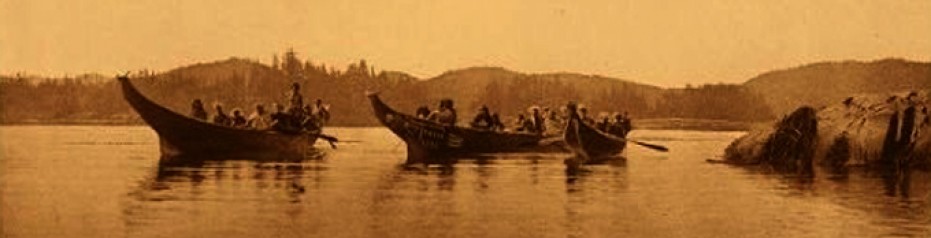
Indians lived a subsistence way of life (hunting, fishing, gathering) that met economic and spiritual (religious) needs. Oregon Country was rich in natural resources, particularly along the Columbia River and west of the Cascades, so food, fuel and fiber were not a problem most of the year. Trade patterns were very sophisticated; Celilo Falls and The Dalles region would be the equivalent to one of today’s super-malls, and the Oregon City area was a smaller trade center.
When early traders, explorers and settlers came, tribes began to lose their traditional ways of life. New diseases (including smallpox, alcoholism and diabetes) had a terrible impact on families and communities in the following centuries.
Missionaries came and tried to convert the native people to new religious faiths; some of these new spiritual practices did have an influence, and even today there are combinations of spiritual practices.
Not all changes were bad: Euro-Americans brought all kinds of new materials and technologies that would increase the quality of life.
Marriages between members of one tribe or race and another tribe brought changes as well as exchanges of customs and traditions. This continues today. One effect is that many Indian people no longer “look” Indian.
Today there are very few traditional speakers of original tribal languages in the Pacific Northwest. The Confederated Tribes of the Grand Ronde Community have implemented a successful Chinook Wawa language program starting with pre-school age children on the reservation. Adult classes are also offered. Chinook Wawa is a derivative of native languages in the Northwest as well as French, Russian and English words and concepts.
The Confederated Tribes of Grand Ronde owns a successful casino located in the town of Grand Ronde. In addition to per capita distributions, casino revenue supports health, education, housing and other social services as well as the charitable Spirit Mountain Community Fund, which has awarded millions of dollars of grants to nonprofit organizations in nearby communities and statewide.
Indian gaming also has a long history among native people. Lewis and Clark described games of chance they observed in Oregon Country. They were also vexed by the high prices and tough business practices of Indian traders they encountered along the Columbia River.
Lewis and Clark also observed that women and men in lower Columbia River villages had very defined roles in domestic and economic life. Women may have enjoyed more equality and economic power in Columbia River tribal communities than their Euro-American contemporaries enjoyed.
In the Confederated Tribes of the Grand Ronde Community today, women often hold the highest elected offices.
Some names for Oregon geographic landmarks that are likely associated with tribes now in the Grand Ronde Confederation include Clackamas, Chemawa, Chemeketa, Kalapuya, Multnomah, Tualatin, Umpqua, and Willamette.
Relationship to the Lewis and Clark Journey
Today the Grand Ronde Tribe cultural resources staff responds to requests for information about the tribes who lived roughly between the Cascades and Coastal Range and from the Columbia River to the north to northern California in the south. For example, during the Lewis and Clark Bicentennial in Oregon, the Tribe hosted a 10-day stop by the National Park Service “Tent of Many Voices” in March, 2006 to commemorate the roles played by Columbia Valley area tribes encountered by the Corps of Discovery 200 years ago roughly along the river from the Cascades to the Coastal Range.
In early November, 1805, the explorers Lewis and Clark traveled quickly down the Columbia with anticipation of reaching the Pacific. On this first trip, they made only brief mention of village life on the south shore of the Columbia. It was late March and early April, 1806, on their return voyage to St. Louis when the Corps of Discovery spent more time documenting tribal life in today’s Oregon. As they paddled upstream, they mentioned villages such as today’s Clatskanie. As they passed today’s Portland/Vancouver, they heard about food shortages further up the Columbia and decided to lay in provisions before proceeding on. An upper-Chinookan Indian man from a village called Nichaqwli at today’s Blue Lake Park (Fairview, Oregon east of Portland) offered to take William Clark and several men back downstream to explore the Willamette River which they had missed seeing earlier. On April 2-3, the group paddled as far as today’s St. Johns Bridge in Portland and described several villages which they understood to be bands of Multnomah Indians. Returning their guide to Nichaqwli village, they learned more about the region’s geography, including Indian communities whose names like Clackamas are still prominent today. Nichaqwli village itself was almost deserted because of a smallpox epidemic that had decimated tribes up and down the Columbia some years before.
A monument to Nichaqwli village was established at Blue Lake Park 200 years later as part Oregon’s commemoration of the Lewis and Clark Bicentennial. The monument features two carved cedar plank house posts, a fish net sinker weight sculpture, and benches carved to represent Chinookan-style cedar canoes. The public art was created thanks to efforts by the Confederated Tribes of Grand Ronde and the Lewis and Clark Trail Heritage Foundation. Funds came primarily from the National Park Service Challenge Cost Share Program for the Lewis and Clark Historic Trail and the Spirit Mountain Community Fund, the benevolence arm of the Confederated Tribes of Grand Ronde from funds generated at Spirit Mountain Casino. The Oregon Heritage Commission also supported the effort. A curriculum guide for teachers is available by contacting Blue Lake Park or the Oregon Chapter, Lewis and Clark Trail Heritage Foundation.
History of Treaties in Oregon
The legal rights of Indians are traced back at least to the U.S. Constitution.
American Indians did not become citizens until 1924, including the right to vote.
Treaties are legal agreements (promises) between nations. The President has the right to make treaties which then must be ratified by the U.S. Senate. Treaties of all nine federally-recognized tribes in Oregon were ratified. Several of these treaties date back to the1850s. The Chinook Tribe’s treaty was never ratified.
Lands left to Indians were generally guaranteed in perpetuity. In Indians terms, this means “as long as the grass shall grow and the waters run.”
Indians made treaties to:
Reserve portions of their land, creating a reservation.
Maintain the right to decide their own government.
Maintain the right to use their lands as they choose in order to preserve the land and keep their usual way of life.
Maintain as a natural entitlement (not a gift) the right to hunt, fish and gather foods and other natural resources in traditional and accustomed places (like fishing for Columbia River salmon, gathering berries, digging roots).
Identify and define the rights of both nations (the tribe and the U.S. government).
Deal with non-Indians on an equal basis.
Establish borders for their nations.
Be able to trade with other nations.
The United States made treaties to:
Take land from the Indians (to then give away or sell for settlement).
Protect certain rights of Indians, many of which they already had, but also to provide services like health and education.
Keep the peace.
Encourage trade with Indian nations.
Set up reservations to keep Indians in one area.
Set up a trust or management relationship for Indian land. As trustee, the government was to take care of reservation land for tribal use and benefit.
End warfare.
Following ratification, political and legal decisions began to impact the treaties:
Because treaties were signed with the federal government and became the Supreme Law of the Land between the nations, the U.S. Courts have more power than opposing state or local laws, though states can pass laws for conservation reasons and tribes are to be the “least restricted.”
Tribes have their own legal system (laws, police, judges) within reservations while also conforming to most state and federal laws.
Some non-Indians believe the treaties are no longer relevant and have outlived their usefulness.
Most Indians and many non-Indians believe treaties are still fitting the need, particularly for conservation of natural resources (as long as the mountains stand and rivers flow). They often take a long view that decisions regarding the people and the natural environment should consider how life will be impacted seven generations from now.