Overview
Lesson 1: Keeping Promises
Lesson 2: The First Oregon Super Mall
Lesson 3: Mapping Warm Springs Country Today
Lesson 4: Two History Timelines
Lesson 5: Preserving Your Heritage
Overview
This unit provides a brief history of the Confederated Tribes of Warm Springs with activities based around the WOTE radio program by the same name. An appendix includes more details about treaties in Oregon and how to approach teaching about Native American culture in general. Drawing from appropriate segments of the Wisdom of the Elders radio program, there is one suggested lesson for each area of focus in elementary social studies: civics (tribal governance and legal framework that protects rights to hunt and gather in traditional places), geography (locations of specific places such as Celilo Falls and huckleberry fields mentioned in the radio program), economics (comparisons of trade then and now at Oregon’s first “super mall”), history (looking at historic timelines and events such as immigration into tribal homelands as foretold and recounted in stories, songs and how the tribe helped newcomers) and social analysis (preserving our heritage by honoring elders; examining how natural resources such as huckleberries/feasts shape values). Much of the tribal information for this unit was drawn directly from the Confederated Tribes of Warm Springs website ( HYPERLINK “http://www.warmsprings.com” www.warmsprings.com). For graphics that accompany each CD segment, go to HYPERLINK “https://www.wisdomoftheelders.org” www.wisdomoftheelders.org
GUIDING QUESTIONS
Why was trade an important factor in the lives of the Warm Springs people?
What information can be incorporated into social studies sessions?
What information is new (and amazing) about Oregon Indians?
Why is research important instead of using information that is available?
PREPARING TO TEACH THIS LESSON
Listen to the entire program on the Confederated Tribes of Warm Springs, then find the exact segment(s) to play for students that match the selected lesson. Try to have a high-quality CD player in the classroom so all can hear the segments selected for each activity. Many of the music segments are also ideal for setting the mood for a lesson and as background for the opening of class.
|
BASED UPON WISDOM OF THE ELDERS RADIO: SERIES 3, PROGRAM 6 Lesson plan written by Larry McClure Historical Introduction: Elder Wisdom: Speaking Native: Sacred Landscape: Tribal Rhythms: Health and Healing: Artists Circle: Turtle Island Storytellers: |
||
| Key Points | ||
| Indians lived in Oregon before written records. They had no concept of land ownership, but regarded the earth as a gift to all.
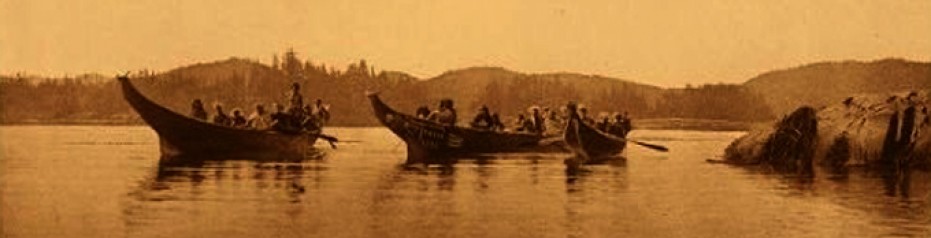
Early European-American visitors believed in the “right of discovery”; if land did not appear to be occupied by other white people, they considered it to be open for grabs and used various methods to “mark” their territory (e.g. maps, surveys, flags, medallions, carvings on trees, certificates, treaties, deeds). At the mouth of the Columbia, Lewis and Clark carved their names and other information into trees to identify their accomplishment. Likewise, they posted a notice at Fort Clatsop when they left and also gave a copy to a Clatsop Indian chief to give to the next seafaring captain arriving at the mouth of the Columbia. Indians lived a subsistence way of life (hunting, fishing, gathering) that met economic and spiritual (religious) needs. Oregon Country was rich in natural resources, particularly along the Columbia River and west of the Cascades, so food, fuel and fiber were not a problem most of the year. Trade patterns were very sophisticated; Celilo Falls and The Dalles region would be the equivalent to one of today’s super-malls with smaller trade centers networked regionally. The Chinook territory from The Dalles to the mouth of the Columbia was a major highway with Chinook “freighters” (60 ft. canoes) hauling large loads of products and people. Downstream villages would trade to villages near Sauvie Island and Portland for a favorite water-growing staple called wapato, a starchy vegetable growing in shallow lakes and along streams. When early traders, explorers and settlers came, tribes began to lose their traditional ways of life. New diseases (including smallpox, alcoholism and diabetes) had a terrible impact on families and communities in the following centuries. Missionaries came and tried to convert the native people to new religious faiths (e.g. the Whitman Mission and Roman Catholic priests); some of these new spiritual practices did have an influence, and even today there are combinations of spiritual practices. Not all changes were bad: Euro-Americans brought all kinds of new materials and technologies that would increase the quality of life. Marriages between members of one tribe or race and another tribe brought changes as well as exchanges of customs and traditions. This continues today. One effect is that many Indian people no longer “look” Indian. Today there are very few traditional speakers of original tribal languages in the Pacific Northwest. The Confederated Tribes of the Warm Springs is working on restoring traditional languages by working with children at the reservation elementary school and interested adults. The Confederated Tribes of the Warm Springs owns and operates the Kah-Nee-Ta Resort/Vacation Center and Indian Head Casino and a number of other enterprises: power and water, composite products, tile, software. Indian gaming has a long history among native people. Lewis and Clark described games of chance they observed in Oregon Country. They were also vexed by the high prices and tough business practices of Indian traders they encountered along the Columbia River. The Confederation is considering development of a casino in the Columbia Gorge. Lewis and Clark also observed that women and men in lower Columbia River villages had very defined roles in domestic and economic life. Women may have enjoyed more equality and economic power in Columbia River tribal communities than their Euro-American contemporaries enjoyed. Some names for Oregon geographic landmarks that are likely associated with tribes now in the Warm Springs Confederation include ___________________. Warm Springs Background The Confederated Tribes of Warm Springs, a 640,000-acre reservation in north central Oregon, is home to a confederation of three tribes: the Wasco, the Walla Walla (later called the Warm Springs), and the Paiute. Long before Europeans set foot on the North American continent, the three tribes had developed societies beside the Columbia River, the Cascade Mountains, and other parts of Oregon. Although they have much in common today, each tribe has its own unique history and heritage. Today there are some 4,000 members of the Confederation, with about 3,000 living on the reservation. The Wascoes The Wasco tribe is made up of The Dalles (Ki-gal-twal-la) and Dog River bands. The Wasco bands on the Columbia River were the eastern-most group of Chinookan-speaking Indians. Although they were principally fishermen, their frequent contact with other Indians throughout the region provided for abundant trade. Roots and beads were available from other Chinookan bands such as the Clackamas. Game, clothing and horses came from trade with Sahaptin bands such as the neighboring Warm Springs and the more distant Nez Perce. In exchange for these goods, the Wasco traded root bread, salmon meal, and bear grass. The Warm Springs The Warm Springs tribe is made up of the Upper Deschutes (Tygh), Lower Deschutes (Wyam), Tenino, and John Day (Dock-spus) bands. The bands who lived along the Columbia’s tributaries spoke Sahaptin. Unlike the Wascoes, the Warm Springs bands moved between winter and summer villages, and depended more on game, roots and berries. However, salmon was also an important staple for the Warm Springs bands, and, like the Wascoes, they built elaborate scaffolding over waterfalls which allowed them to harvest fish with long-handled dip nets. Contact between the Warm Springs bands and the Wascoes was frequent, and, although they spoke different languages and observed different customs, they could converse and traded heavily. The Paiutes The Paiutes lived in southeastern Oregon and spoke a Shoshonean dialect. The lifestyle of the Paiutes was considerably different from that of the Wasco and Warm Springs bands. Their high-plains existence required that they migrate further and more frequently for game, and fish was not an important part of their diet. The Paiute language was foreign to the Wasco and Warm Springs bands, and commerce among them was infrequent. In early times, contact between them often resulted in skirmishes. Although Paiute territories historically included a large area from southeastern Oregon into Nevada, Idaho, and western Utah, the Paiute bands which eventually settled at Warm Springs lived in the area of Lake, Harney, and Malheur counties in Oregon. Tribal Organization Founded in 1938, the reservation government is led by an 11-member tribal council. This eleven-member body includes eight elected members who serve three-year terms, along with three traditional chiefs who serve for life. There are three districts on the reservation, with a Chief from each district. The Simnasho and Agency Districts each have three elected representatives and the Seekseekqua District has two elected representatives. Tribal headquarters is in Warm Springs, Oregon. For a more comprehensive understanding of tribal history, go to www.warmsprings.com. Relationship to the Lewis and Clark Journey In October 1805 and again in April 1806 Lewis and Clark encountered some of their most memorable experiences along the section of the Columbia River familiar to tribes of the present-day Warm Springs Reservation. Celilo Falls, favorite fishing grounds for many Northwest Indian tribes, was also a major trading center for the region. The explorers were amazed by the abundant salmon and other natural resources of the Columbia Gorge. The spent several days on the downriver and upriver trips, traversing the dangerous rapids and portaging the trouble spots and enlisted local Indians to help them in various ways. Fishing for salmon and other species continues to be a major enterprise for tribal members today. They were particularly impressed by the canoes used by tribes of the Columbia, but also wrote extensively about shelters, burial practices as well as plants and animals, including the California condor (thunderbird) in the mid-Columbia area. History of Treaties in Oregon The legal rights of Indians are traced back at least to the U.S. Constitution. American Indians did not become citizens until 1924, which gave them the right to vote. Treaties are legal agreements (promises) between nations. The President has the right to make treaties, which then must be ratified by the U.S. Senate. Treaties of all nine federally-recognized tribes in Oregon were ratified. Several of these treaties date back to the1850s. The Chinook Tribe’s treaty was never ratified. Lands left to Indians were generally guaranteed in perpetuity. In Indians’ terms, this means “as long as the grass shall grow and the waters run.” Indians made treaties to: Reserve portions of their land, creating reservations. Maintain the right to decide their own government. Maintain the right to use their lands as they choose in order to preserve the land and keep their usual way of life. Maintain as a natural entitlement (not a gift) the right to hunt, fish and gather foods and other natural resources in traditional and accustomed places (e.g. fishing for Columbia River salmon, gathering berries, digging roots). Identify and define the rights of both nations (the tribe and the U.S. government). Deal with non-Indians on an equal basis. Establish borders for their nations. Be able to trade with other nations. The United States made treaties to: Take land from the Indians (to then give away or sell for settlement). Protect certain rights of Indians, many of which they already had, but also to provide services like health and education. Keep the peace. Encourage trade with Indian nations. Set up reservations to keep Indians in one area. Set up a trust or management relationship for Indian land. As trustee, the government was to take care of reservation land for tribal use and benefit. End warfare. Following ratification, political and legal decisions began to impact the treaties: Because treaties were signed by the federal government and became the Supreme Law of the Land between the nations, the U.S. Courts have more power than opposing state or local laws, though states can pass laws for conservation reasons and tribes are to be the “least restricted.” Tribes have their own legal system (laws, police, judges) within reservations, while also conforming to most state and federal laws. Some non-Indians believe the treaties are no longer relevant and have outlived their usefulness. Most Indians and many non-Indians believe treaties are still fitting the need, particularly for conservation of natural resources (as long as the mountains stand and rivers flow). They often take a long view that decisions regarding the people and the natural environment should consider how life will be impacted seven generations from now.
|
SUBJECT AREAS
SKILLS LEARNING OBJECTIVES |
|